A client campaign hits $10k in daily spend. Comments flood in — "How much?", "Does this ship to Canada?", "Is the XL still in stock?" By the time someone on the team spots them, it is the next morning. The leads have already gone cold. The competitor who replied in two minutes got the sale.
We watched this happen over and over before building Rypl. This article breaks down what is actually broken about Facebook comment management, why existing tools could not fix it, and what we built instead.
The Problem No One Talks About: Managing Facebook Comments at Scale
Facebook remains the largest social platform on the planet, with over 2 billion daily active users and more than 200 million businesses using it to reach customers. The opportunity is massive. The execution gap is just as big.
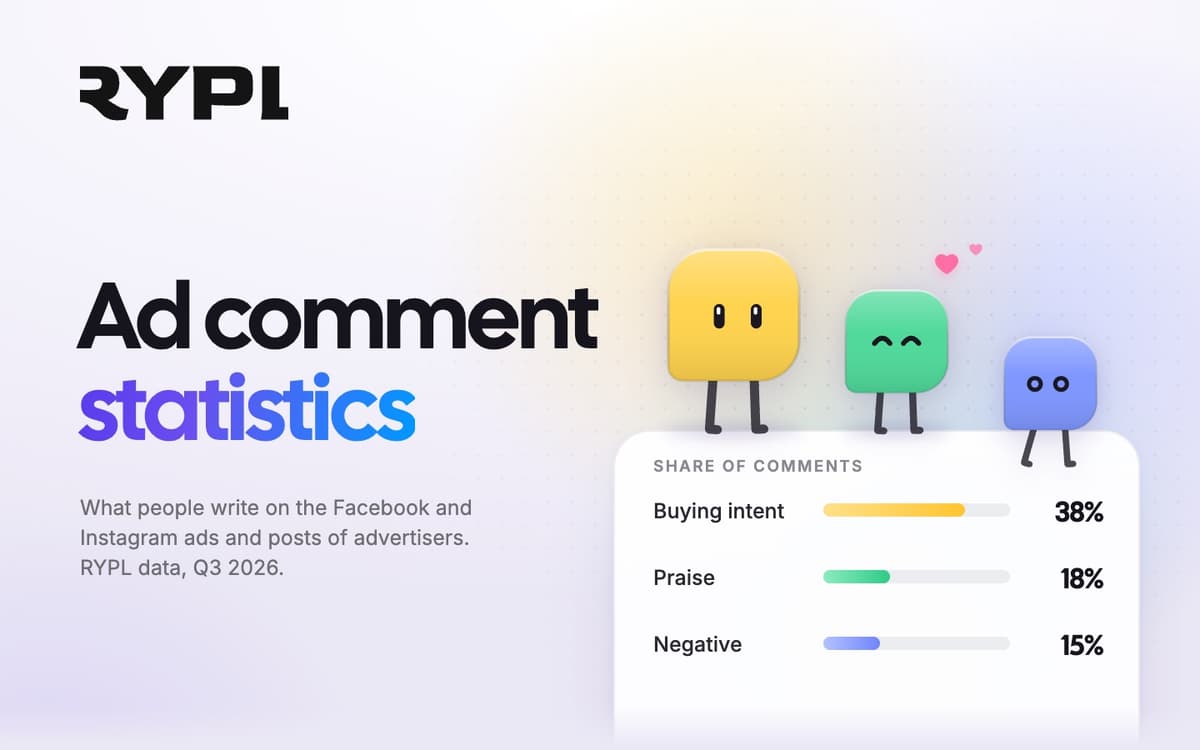
Edison Research consistently shows that 42% of consumers expect a brand to reply within 60 minutes on social media. Yet according to Sprout Social, the average business response time on Facebook sits somewhere between 4 and 12 hours — if they respond at all. Less than 20% of comments under business posts ever receive a reply.
The daily reality looks like this: notifications arrive from boosted posts, carousel ads, and reels simultaneously. DMs land in multiple inbox folders — some in "message requests," others filtered into spam. Real questions sit next to bot comments and irrelevant tags. By the time someone on your team spots a "How much is this?" comment, the lead has already gone cold.
This is not a staffing problem. It is a structural one. Humans cannot match the speed, volume, and consistency that social media engagement now demands.
What We Saw After Years in Digital Marketing
We have spent years building and managing Meta ad campaigns — optimizing creatives, testing audiences, scaling budgets. The advertising side kept getting better. Targeting improved. Creative tools evolved. CPMs became more predictable.
But the real bottleneck was never in the ads. It was in what happened after someone engaged.
We watched campaigns generate hundreds of comments per day. Engagement metrics looked great on dashboards. Yet actual conversions lagged behind. When we dug into the data, the pattern was always the same: the leads were there, but no one was talking to them fast enough.
A comment asking "Is this available in my area?" would sit unanswered for six hours. A DM saying "Can I get a bulk discount?" would get buried under 40 other messages. By the time someone replied, the customer had already bought from a competitor — or simply lost interest.
We tested multiple tools. None of them solved the actual problem. So we decided to build one that would.
Why Existing Tools Fell Short
Generic Auto-Responders Miss Context
Most auto-reply tools work the same way: someone comments, the tool fires a pre-written response. "Thanks for your comment" or "Check our website for more info." These replies ignore what the person actually said.
When a potential buyer writes "How much does this cost?" and gets back "Thanks for engaging with our page," that is not automation — it is a trust killer. The customer feels ignored, and your brand looks like it does not care enough to answer a simple question.
Moderation Tools Do Not Understand Intent
Traditional moderation works on keyword blocklists. It catches profanity and obvious spam. But it misses everything in between.
A comment saying "This looks too good to be true" is not spam — it is skepticism, and it is a sales opportunity. A sarcastic "Sure, another miracle product" is negative sentiment that a human would handle differently than actual abuse. Keyword filters cannot tell the difference. They either let everything through or block too aggressively.
Nothing Connected Comments to Revenue
Even the tools that do reply or moderate treat engagement as a vanity metric. There is no connection between "someone asked about pricing on post X" and "that person converted three days later." Comment data lives in one silo, sales data in another, and no one connects the dots.
Without that link, you cannot measure whether your comment engagement actually drives revenue — or just generates noise.
How Rypl Approaches Facebook Comment Automation
AI That Reads Before It Replies
Rypl does not fire canned responses. The AI reads the intent behind each comment and answers from your knowledge base. On Pro and Ultra it also looks at the post or ad itself, including the image, video and copy.
Every incoming comment is classified by intent:
- Purchase intent — pricing questions, availability checks, "how to order" inquiries
- Support requests — complaints, shipping issues, product problems
- General engagement — compliments, casual questions, emoji reactions
Each intent triggers a different response strategy. A pricing question gets a direct answer with product details. A complaint goes to a person through your Needs attention queue. A compliment can get a thank-you (Pro and up).
Moderation That Protects Your Brand
Rypl uses sentiment-aware moderation instead of simple keyword matching. It distinguishes between actual spam, toxic comments, competitive trolling, and legitimate negative feedback.
Spam and abuse get hidden automatically, within seconds of being posted. By default, negative but genuine feedback stays visible so you can address it publicly, which builds trust. You can tighten moderation with banned words and author blocking, and on Pro with moderation rules written in plain words.
Tone That Sounds Like You, Not a Bot
Every brand has a voice. Some are friendly and casual. Others are professional and direct. Some are bold and sales-driven. You set your agent's brand voice once, and Rypl keeps it consistent — whether a comment comes in at 2 PM or 2 AM.
Consistency matters more than most brands realize. A page that responds quickly and sounds human at all hours earns credibility. Credibility converts.
Intent on Every Comment
Unlike manual replies lost in Messenger threads, Rypl keeps every conversation in one inbox, with the intent behind each comment and the agent that handled it. The questions that keep repeating are worth feeding back into your ad copy and your knowledge base.
Here is the shift Rypl is built for:
| Metric | Before Rypl | With Rypl |
|---|---|---|
| Avg. response time | 4-6 hours | Under 60 seconds |
| Questions answered | ~20% | The ones your knowledge base covers, around the clock |
| After-hours replies | Next morning | Same speed as business hours |
| Spam visible to customers | Varies | Hidden automatically |
Real Results: What Happens in the First 30 Days
In early deployments with teams selling physical products through Facebook ads, Rypl's own measurements show about +10% ROAS within the first month. Not through any single dramatic change, but through the compound effect of three things happening simultaneously: faster replies capturing leads that previously went cold, fewer missed messages during off-hours, and cleaner comment sections that improve ad performance algorithmically.
The aim is fewer missed sales and far less time spent on manual comment management. The AI handles the volume — the team focuses on strategy.
What Came Next (Updated October 2026)
Instagram Comment and DM Automation
Facebook pages were the starting point. Instagram comments and Direct messages are supported now, and so are comments on TikTok ads.
Conversational Memory Across Threads
Conversation memory is live on the Ultra plan: your agent remembers what each person asked before, so a customer who asked about sizing last week doesn't start over when they comment again.
Website Context
Your knowledge base takes your website, files and Q&A, so replies draw on your own pages. There is no live catalog or inventory sync, so keep prices and stock notes in it up to date.
Several Brands in One Account
Agencies managing multiple pages need one place to work. Rypl runs several brands from one login: Pro covers up to 5 accounts and AI replies on 20 channels, Ultra has no limit, and each brand can have its own AI agent.
Why We Built This, Not Something Else
We could have built another scheduling tool, another analytics dashboard, another social inbox. The market is full of them.
We built Rypl because none of those tools close the gap between ad spend and actual revenue. They help you manage comments better. They do not make sure the comment gets answered before the lead goes cold.
Every unanswered comment is a lead you already paid to generate walking away. Rypl was built to stop that — automatically, in your voice, at any hour.
Start your free 7-day trial and see what your comments are actually worth.