Open any ad you're running right now and scroll the comments. Past the emojis and the tagged friends, you'll find them: "How much?" "Does this ship to the UK?" "Is the blue one back in stock?" Those aren't idle comments. They're people with their wallet halfway out, asking you a question in public — and if the answer doesn't come fast, they close the app and forget you existed.
Most brands miss them. BrandBastion's benchmarks put the average brand response rate to comments at just 7%. So 93 out of every 100 comments — including the ones from ready buyers — go unanswered. That's not a moderation problem. It's a revenue problem, and it's fixable once you learn to read intent.
The buyers are already in your comments
Social isn't a branding channel anymore; it's a storefront. 82% of consumers use social media for product discovery and research, and among Gen Z, 46% now start their shopping journey on social — ahead of Google Search (SellersCommerce / Sprout, 2026). Sprout found 81% say social media pushes them into impulse purchases, 28% at least monthly (Sprout 2025 Index).
That's the mindset of the person commenting on your ad. They're not far from the checkout — they just have a question first. Answer it while they're in the moment and you close. Leave it, and their impulse cools or a competitor answers instead.
What buying intent actually looks like in a comment
Not every comment is a lead, and treating them all the same is how you waste time. The fastest way to triage is to tier each comment by how close it is to a purchase:
| Tier | What it means | Example comments |
|---|---|---|
| Hot — purchase intent | Ready or nearly ready to buy | "How much?", "where do I get this?", "do you ship to Canada?", "link?", "is this in stock in medium?" |
| Warm — consideration | Interested, needs one more answer | "does this work for oily skin?", "how's it different from [brand]?", "how long is shipping?", "is it worth it?" |
| Objection | Interested but skeptical | "seems expensive", "is this a scam?", "does it actually work?", "too good to be true" |
| Support | Existing customer | "my order hasn't arrived", "how do I return this?", "wrong size came" |
| Noise | Spam, bots, trolls, filler | "🔥", crypto links, insults, off-topic |
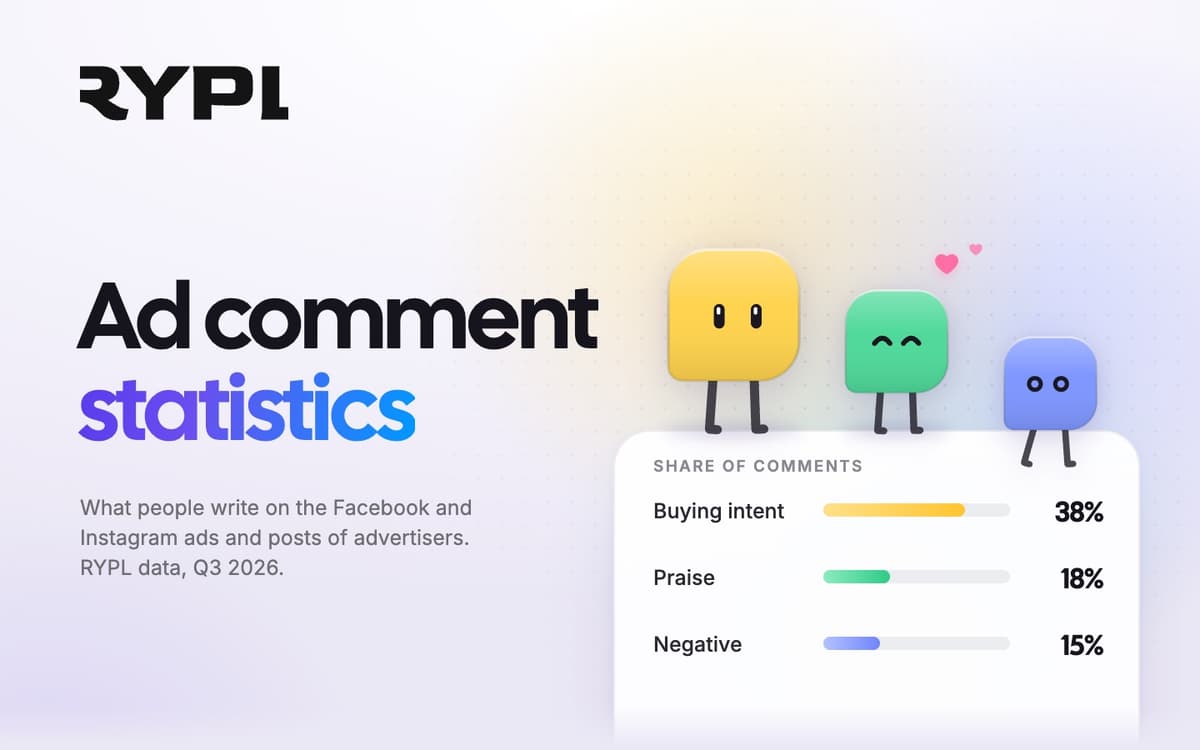
The money is in the top three. A specific, answerable question about your product is the single strongest signal there is — and the split is predictable. In Gorgias's 2026 Conversational Commerce report, roughly a third of e-commerce conversations are product questions (recommendations, stock, specs) and about a fifth are order and shipping questions. Your comment section follows the same shape: a steady stream of buyers asking the exact questions that, answered well, end in a sale.
Intent signals change by industry
The words that mean "ready to buy" depend on what you sell. Train your eye (or your tool) on the right ones:
- Fashion & apparel: sizing and fit ("does this run small?", "what size is she wearing?"), color/stock, returns policy.
- Beauty & supplements: suitability and results ("is this ok for sensitive skin?", "how long until I see results?", "any side effects?"), ingredients.
- Electronics & gadgets: specs and compatibility ("does it work with iPhone?", "battery life?", "is the newer model out?").
- Local & services: availability and location ("do you have appointments this week?", "do you cover [city]?", "how much for [service]?").
- Info products & coaching: fit and proof ("is this for beginners?", "does it work for B2B?", "what's the refund policy?").
Why speed decides whether intent converts
Detecting intent is only half of it. The other half is answering before the moment passes, and the data on this is blunt.
The MIT/InsideSales Lead Response Management study — three years, six companies, more than 15,000 leads — found that contacting a lead within 5 minutes versus 30 makes you 21x more likely to qualify it, and 100x more likely to reach them at all. Almost nobody hits that bar: when Drift submitted real leads to 433 companies, only 7% responded within 5 minutes, and 55% didn't respond within five business days. The average was 42 hours (Drift benchmark).
On social the window is even tighter. Sprout's 2025 Index, surveying over 4,000 consumers, found:
- 69% expect a same-day response.
- 84% say response speed shapes how they see the brand.
- 73% will buy from a competitor if a brand doesn't respond.
So a hot comment left for three hours isn't neutral — it actively pushes the buyer toward whoever answers first, in public, where every other prospect sees the question sitting there unanswered. When brands do answer intent comments, the numbers move: BrandBastion's case data shows replying to purchase-intent comments driving an 11% conversion rate and cutting cost per action by 26%. In a controlled A/B test at MindValley, adding comment management as the only variable delivered +48% ROAS and +54% conversion rate (full breakdown).
Do the math: what unanswered intent costs you
Plug in your own numbers, but here's the shape of it. Say an ad set pulls 2,000 comments a month. Using the ratios above:
- ~⅓ show product/purchase interest → about 660 high-intent comments.
- At the 7% average response rate, you answer ~46 of them and leave ~614 unanswered.
- Answered intent comments convert at roughly 11%. Answering all 660 would mean ~73 sales; answering 46 means ~5.
- At a $60 average order value, that gap is about $4,000 a month — on traffic you already paid to generate.
The exact figures will differ for you, but the mechanism doesn't: intent volume is high, response rate is low, and the difference compounds every month. You're not short on demand. You're short on answered demand.
Why spotting intent by hand doesn't scale
You can read intent manually. You just can't do it at the speed and volume paid social throws at you.
A single ad set at scale generates hundreds of comments a day across time zones. The buyer who asks "how much?" at 11pm Saturday won't wait for Monday. Add multiple pages, multiple languages, and a layer of spam burying the real questions, and manual triage collapses — you end up answering the loudest comments, not the highest-intent ones. That's how a 7% response rate happens even at teams that care.
The job has four requirements that don't fit a human rota: it runs 24/7, reacts in seconds, reads context instead of keywords, and separates a real buyer from noise within seconds. That's a classification problem, and it's what AI is built for.
How AI intent detection works
An intent-detection system reads every new comment the moment it lands and classifies it — purchase, consideration, support, complaint, spam — using the post it's under for context, not just keyword matching. "Price?" under a product ad is purchase intent; the same word under a giveaway might not be. Context is the whole game.
Once classified, each type runs on its own track. Purchase-intent comments get a specific answer with the detail that closes. Support issues go to someone who can fix them. Spam gets hidden. This is the model BrandBastion uses at the enterprise end, and Rypl builds it in: intent detection on every plan, and reply rules that act on it from Pro. In practice, Rypl:
- Classifies intent within seconds across Facebook, Instagram, and TikTok, and on Pro and up reads the ad creative for context.
- Treats buying questions differently so a "how much?" gets the price, while a "🔥" can get a thank-you or be skipped (reply rules, Pro and up).
- Answers from your knowledge base — your website, files and Q&A, with real prices, sizes and shipping terms — so replies are specific instead of "DM us!".
- Routes when it matters — complaints and anything urgent land in a Needs attention queue for a person, and when a buyer messages you, the agent answers in Messenger or Instagram Direct too.
- Runs 24/7 in the commenter's language, so the Saturday-night buyer gets an answer at 11pm, not Monday.
In RYPL's own beta data, about 28% more conversations converted to sales after intent detection was turned on — because the buyers who were always in the comments finally get answered while they're still buying.
Reply templates that convert
Detection is wasted if the reply is generic. Match the response to the intent tier:
- Hot ("how much?"): "Hi [name]! The [product] is $49 and ships to [country] in 3–5 days — here's the link: [url]. Want me to check a size or color for you?" Give the price, remove the friction, add one nudge.
- Warm ("does it work for oily skin?"): "Great question — yes, it's oil-free and made for combination/oily skin. Most people notice less shine within a week. Happy to point you to the right one: [url]." Answer the specific worry, then guide.
- Objection ("seems expensive"): "Totally fair. It's [X] because [real reason — quality/quantity/results], and it's backed by a 30-day money-back guarantee, so there's no risk in trying it." Acknowledge, justify, de-risk.
- Skeptic ("is this a scam?"): "Understandable — we're a real brand with [X] verified reviews and a money-back guarantee. Here's our site: [url]. Happy to answer anything." Social proof plus guarantee.
- Support ("my order's late"): "So sorry about that, [name]. I've flagged it — can you DM us your order number and we'll sort it today?" Empathy, then move to DM.
Two rules across all of them: reply in public first (everyone scrolling sees an active, responsive brand), then take the transaction to DM.
A practical playbook
- Define your signals. Write the exact phrases that mean "ready to buy" for your product. Tag those Hot.
- Triage by intent, not by time. Answer Hot first, Warm and objections next, support on its own track, hide the noise. Newest-first is the wrong order.
- Answer with specifics. "Yes — the blue's back, $39, ships tomorrow" converts. "Check our website!" loses the sale. Connect a knowledge base so answers are accurate.
- Turn objections around. Skeptical comments are buyers asking to be convinced — answer them in public and you close the asker and everyone reading.
- Move hot buyers to DM. Public reply for proof, private message for the close.
- Cover every hour. Buyers don't comment on your schedule. If you can't staff nights and weekends, automate that window — it's where most unanswered intent sits.
How to measure it's working
Track five numbers:
- Intent response rate — share of Hot/Warm comments actually answered. Benchmark: beat the 7% brand average, aim for near-100% on Hot.
- Time to first reply — median on intent comments. Target minutes, not hours.
- Intent capture — how many buy-signal comments were flagged and followed up versus lost.
- Comment-assisted conversions — sales that touched an answered comment. This is where the +28% in RYPL's own beta data showed up.
- CPA delta — cost per action before vs after. BrandBastion saw −26%; watch your own move over 30 days.
Common mistakes to avoid
- Answering by recency, not intent — the loudest comment isn't the most valuable one.
- Generic deflections — "DM us!" adds a step and loses the impulse. Answer the question in the comment.
- Ignoring objections — a "too expensive" left alone reads as "they couldn't defend the price."
- Deleting instead of hiding — hide harmful comments; deleting can look punitive and misses the softer signals.
- Set-and-forget automation — tune the brand voice and knowledge base first, then let it run.
The takeaway
Your ads are already generating buying intent — you pay for it every time someone comments "how much?". The leak isn't traffic; it's the 93% of comments nobody answers, including the ready buyers. Learn the intent tiers, answer the hot ones in minutes with specifics, turn objections around in public, and cover every hour of the day. Do it by hand while your volume is small. Once it isn't, let AI classify and answer so buyers stop waiting in your comments while a competitor answers first.
Start a free 7-day Rypl trial and turn on intent detection — connect a page and watch which comments were quietly costing you sales.
Sources: MIT/InsideSales Lead Response Management study; Drift lead-response benchmark (433 companies); Harvard Business Review, "The Short Life of Online Sales Leads" (2011); Sprout Social 2025 Index; BrandBastion; Gorgias 2026 Conversational Commerce Trends Report; SellersCommerce social commerce statistics 2026. The lead-leakage figures are an illustrative model; Rypl conversion figures are from Rypl product data.